logo
Tel:
Tellhow Technology (Chongqing) Co., Ltd.
Our motor, save your energy, drive your success!
Home Blog

Wound Rotor Motors Hightorque Potential Underused in Industry

I'm Online Chat Now
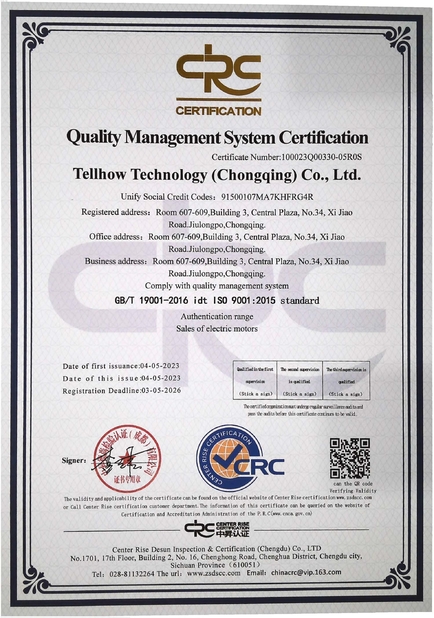
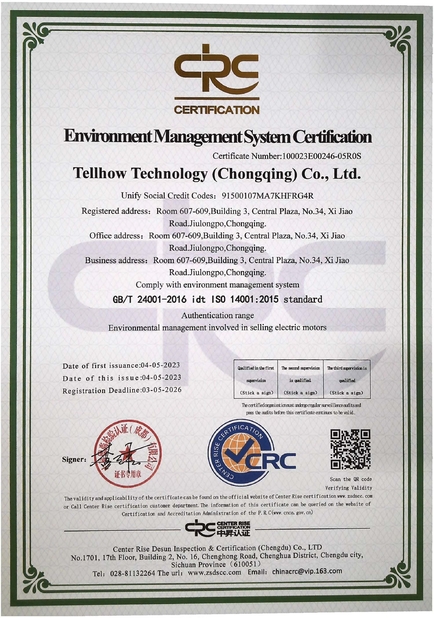
Certification
China Tellhow Technology (Chongqing) Co., Ltd. certification
Customer Reviews
The motor runs perfectly with low noise, and the video remote installation guidance service is excellent. Our leaders are very satisfied.

—— Misha Gladushchenko

The factory is very rigorous and serious about technology, and can provide very scientific suggestions for adjusting the details of motors according to our usage environment. This is a very reliable company.

—— Nur Rizky Amalia

Company Blog
Wound Rotor Motors Hightorque Potential Underused in Industry
Latest company news about Wound Rotor Motors Hightorque Potential Underused in Industry

Imagine operating a massive crane, slowly lifting hundreds of tons of steel. In this scenario, you need a motor that can deliver powerful starting torque while maintaining smooth speed control for precise positioning. The wound rotor induction motor is precisely engineered for such heavy-duty, variable-speed applications.

What Makes Wound Rotor Motors Unique?

Unlike their more common squirrel cage counterparts, wound rotor induction motors feature a distinctive design that gives them specialized capabilities. What exactly sets these motors apart? How do they achieve their remarkable starting and speed control characteristics? And why haven't they achieved the same widespread adoption as squirrel cage motors? This article explores the working principles, characteristics, and applications of wound rotor induction motors.

Structure and Operating Principles

As the name suggests, wound rotor induction motors have coils wound on their rotors. They consist primarily of two components:

  • Stator: Similar to squirrel cage motors, the stator is constructed from laminated silicon steel sheets with embedded three-phase windings.
  • Rotor: The key differentiator - the rotor also contains three-phase windings with the same number of poles as the stator. These windings connect to external resistors (typically three-phase, star-connected rheostats) via slip rings and brushes.
How It Works:
  1. The stator generates a rotating magnetic field when energized with three-phase AC power.
  2. This rotating field induces electromotive force in the rotor windings.
  3. Current flows through the closed rotor circuit (via external resistors), creating electromagnetic torque that drives rotation.
  4. Adjusting external resistors modifies rotor circuit resistance, affecting current magnitude and phase to control starting torque and speed.
Key Advantages

Wound rotor motors excel in specific applications due to several unique characteristics:

  • High starting torque: Their most notable advantage. External resistors improve power factor by reducing phase difference between rotor current and magnetic field, producing greater torque - crucial for heavy loads like cranes and elevators.
  • Low starting current: Unlike squirrel cage motors' high inrush current, wound rotor designs limit starting current through external resistance, protecting electrical systems.
  • Speed control: Adjusting rotor resistance enables simple speed variation - increased resistance lowers speed, while decreased resistance raises it.
  • Overload capacity: These motors typically withstand temporary overload conditions well.
Limitations

Despite their advantages, wound rotor motors see limited adoption due to several drawbacks:

  • Complex construction: Additional components like slip rings, brushes, and external resistors increase complexity and manufacturing costs.
  • Maintenance requirements: Slip rings and brushes wear out, requiring regular inspection and replacement.
  • Lower efficiency: External resistors cause additional energy losses.
  • Larger physical size: Compared to equivalent squirrel cage motors.
  • Limited speed range: Resistance-based speed control has restricted range and reduced efficiency during adjustment.
Comparison with Squirrel Cage Motors
Characteristic Wound Rotor Induction Motor Squirrel Cage Induction Motor
Construction Complex, with slip rings, brushes, and external resistors Simple, without additional components
Cost High Low
Maintenance High, requires regular brush/slip ring replacement Minimal, nearly maintenance-free
Starting Torque High Relatively low
Starting Current Low High
Speed Control Adjustable via rotor resistance Typically requires variable frequency drives
Efficiency Lower Higher
Size Larger Smaller
Applications Cranes, elevators, rolling mills (heavy-duty, variable speed) Fans, pumps, compressors (constant or near-constant speed)
Market Share 5-10% ~90%
Typical Applications

Wound rotor motors remain indispensable in specific sectors:

  • Lifting equipment: Cranes, hoists, and elevators benefit from high starting torque and speed control for precise load handling.
  • Rolling mills: Withstand significant impact loads during operation.
  • Mining machinery: Hoists and crushers demand reliability in harsh conditions.
  • Wind power generation: Some doubly-fed induction generators use wound rotor designs for flexible power control.
Future Outlook

While power electronics and variable frequency drives have expanded squirrel cage motors' capabilities, wound rotor designs maintain relevance in cost-insensitive, high-reliability applications. Advancements in materials and manufacturing may improve their efficiency and reduce maintenance needs, potentially expanding their role in industrial applications.

Pub Time : 2026-04-04 00:00:00 >> Blog list
Contact Details
Tellhow Technology (Chongqing) Co., Ltd.

Contact Person: Mr. Alex Yip

Tel: +86 2386551944

Send your inquiry directly to us
Tellhow Technology (Chongqing) Co., Ltd.
Room 607-609, Building 3, Central Plaza, No.34, Xi Jiao Road. Chongqing. China
Tel:86-155-23661144
Mobile Site Privacy Policy | China Good Quality High Voltage AC Motor Supplier. © 2022 - 2026 Tellhow Technology (Chongqing) Co., Ltd.. All Rights Reserved.